Mosel Riesling & Climate Change: Risks and Adaptation
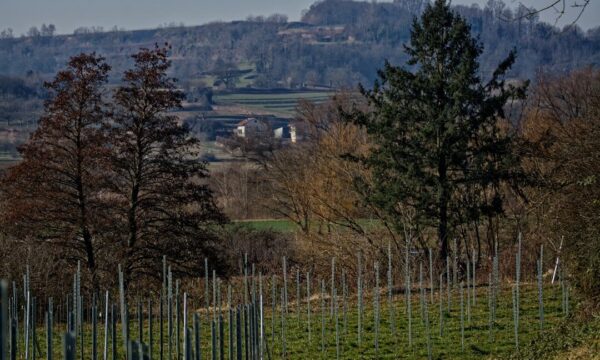
Climate change has made reliable Riesling ripening more achievable in the Mosel, but it has also made vineyard decisions more complex. Earlier vine development increases exposure to spring frost, while heat, drought, intense rain and humid disease pressure can all strike within a single growing season. The result is greater variability—not a tidy progression from “cool” to “warm.”
What is changing in the Mosel?
- Vine development is earlier. A Middle Mosel study found phenological events shifted 6–15 days earlier between 1967 and 2001.
- Historic ripening risk has eased. The German Wine Institute notes that warmer averages can benefit northern German wine regions—provided excessively dry summers don’t become the norm.
- New risks overlap. Early budburst, late frost, heat, water stress, heavy rain, erosion and disease pressure can all converge within a single season.
- Site still matters. Exposure, slope, soil depth, water availability, vine age and vineyard work mean no single temperature figure can describe the whole Mosel.
What the Mosel research actually shows
Long-term regional studies confirm a warming and earlier-development signal, but their scope matters. Research around Bernkastel-Kues recorded a 1.1 K rise in annual mean temperature during the later half of a 1945–2000 series, alongside phenological advances of 6–15 days from 1967–2001.
A separate study of the Upper Moselle and Luxembourg, covering 1951–2005, found vine development about two weeks earlier, higher must density and lower acidity.
These findings should not be converted into a universal chemistry table for every Mosel bottle. The studies cover specific subregions and periods, and the Upper Moselle work explicitly notes large variation in future estimates. Vintage weather, vineyard position and producer choices remain decisive.
| Climate pressure | Why it matters | Possible response |
|---|---|---|
| Earlier budburst | Green tissue may be exposed before spring-frost danger has passed | Site-specific pruning and risk planning; avoid assuming every early start is an advantage |
| Heat and drought | Young vines and shallow soils may experience water stress | Protect soil structure, manage cover and shade, and adapt work to site and water availability |
| Rapid sugar accumulation | Sugar, flavor development and acidity may not move in lockstep | Taste and sample parcels frequently; use selective or staged picking where practical |
| Intense rain | Steep slopes are vulnerable to runoff and erosion | Maintain appropriate ground cover and drainage while preserving safe vineyard access |
| Humid periods | Mildew and rot pressure can rise quickly | Use timely canopy, crop-protection and harvest decisions based on local conditions |
Why Riesling still fits the Mosel
Riesling is a slowly ripening variety prized for retaining defining acidity, and the German Wine Institute identifies stony steep slopes and river valleys as its classic settings. That doesn’t make the grape immune to warming.
It does explain why the variety remains the region’s foundation while growers adjust how individual parcels are managed and when they are picked.
The Mosel also holds more variation than the shorthand “steep slate” suggests. The Saar, Ruwer, Middle Mosel, Lower Mosel and Upper Moselle differ in elevation, exposure, soil and mesoclimate—some sitting on Devonian slate, others on more varied Buntsandstein or Muschelkalk substrates. A cooler side valley and a sun-catching river bend can respond very differently during the same heat or rain event.
How adaptation works in practice
There is no single climate-change recipe. Canopy decisions can retain shade around fruit during hot periods, but dense growth can also slow drying after rain.
Cover crops may protect soil and improve trafficability, yet they can compete for water on a dry site. Harvesting earlier can protect acidity, but picking before flavor development is complete creates a different imbalance. Each measure carries a site- and season-specific trade-off.
Researchers have also examined agroforestry—integrating trees and vines—as a possible Mosel adaptation. A peer-reviewed case study used farmer interviews to weigh opportunities and barriers related to heat, drought, biodiversity, steep slopes and mechanization. This is evidence the approach is under investigation, not proof it is already standard practice or guaranteed to improve every vineyard.
Cellar choices remain tied to vineyard conditions. Producers can sort fruit, separate parcels by Einzellage, choose fermentation paths, and decide whether a given lot best suits a Trocken, Feinherb or naturally sweeter Prädikat expression. Claims that one fermentation temperature, sulfur addition or laboratory threshold solves a region-wide climate problem are not credible without wine-specific evidence.
What climate change means for buyers
- Read the exact label. Kabinett, Spätlese, Trocken and Grosses Gewächs communicate very different things; use our German Riesling label guide.
- Check alcohol, not assumptions. Alcohol by volume can help distinguish a light fruit-sweet wine from a fully fermented dry one, though it doesn’t reveal residual sugar on its own.
- Use producer notes. Technical sheets and harvest reports tell you more than a generic “warm vintage” label ever could.
- Avoid universal aging rules. Style, balance, closure and storage matter alongside the season; see how long German Riesling can age.
A warmer season does not automatically produce heavy, alcoholic Riesling, just as a cool season doesn’t guarantee delicacy. The useful question is always how a specific vineyard and producer handled the conditions at hand.
Sources
- German Wine Institute: climate and weather in German wine regions
- German Wine Institute: Riesling grape profile
- University of Trier/Bayreuth: climate and vine development in the Middle Mosel
- University of Bonn: climate change and viticulture in the Upper Moselle and Luxembourg
- Forests: agroforestry opportunities and barriers in Mosel viticulture
Frequently asked questions
For regional comparison, see our analysis of Rheingau Riesling Climate Impact and Viticultural Adaptation.
Is the Mosel becoming too warm for Riesling?
u003cpu003eNot as a simple region-wide rule. Warming has eased some historic ripening constraints, but earlier vine development, heat, drought, intense rain and compressed harvest decisions bring new risks. Riesling remains central to the Mosel, and outcomes still differ by site, vine age, farming, harvest date and vintage.u003c/pu003e
Does climate change make Mosel Riesling sweeter or higher in alcohol?
u003cpu003eWarmer conditions can accelerate sugar accumulation, but finished sweetness and alcohol are winemaking outcomes as much as vineyard outcomes. A producer can harvest for different styles and choose how far fermentation proceeds, so the label and technical sheet are better guides than vintage temperature alone.u003c/pu003e
Why can earlier budburst increase frost risk?
u003cpu003eWhen buds open earlier, tender green tissue may be exposed for longer before the usual danger of spring frost has passed. Warming can therefore advance growth while frost remains a serious, episodic hazard.u003c/pu003e
How are Mosel growers adapting to climate pressure?
u003cpu003eResponses include canopy and shade management, selective picking, erosion control, soil-cover and water-retention strategies, matching work to site conditions, and making cellar decisions from the fruit actually harvested. Agroforestry has also been studied in the Mosel, but shouldn’t be treated as a universal or proven solution for every steep vineyard.u003c/pu003e
Does a warm Mosel vintage age badly?
u003cpu003eNot necessarily. Aging depends on balance, concentration, wine style, producer decisions, closure and storage—not a single weather variable. Assess the specific bottle rather than applying a fixed drinking window to every wine from a warm year.u003c/pu003e
Germany Rieslings Editorial Team
German Wine Editorial ReferenceResearched, structured, and fact-checked against official Deutsches Weininstitut (DWI) documentation, German Federal Wine Law (Weingesetz), and VDP.Die Prädikatsweingüter standards.